Press releases
Better protection: Innovative spray impregnation technology from Miele Professional for fire fighters protective clothing
-
Miele PowerGuard PRO combines targeted external treatment with reduced water and impregnating agent consumption
-
Three additional programme options for protective and rescue clothing
With PowerGuard PRO, Miele is expanding its ‘Benchmark’ range of washing machines – with capacities of 12, 16 and 20 kilograms – to include a new programme option for the treatment of firefighter and rescue clothing. The process was developed specifically for the impregnation of personal protective equipment (PPE); it combines features of the established bath and spray impregnation methods and significantly reduces the consumption of the chemicals used.
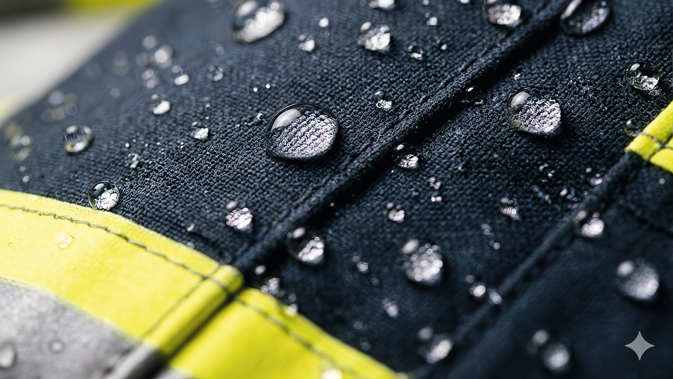
The liquid-repellent finish applied to the textile outer fabric is a key functional feature of modern fire and rescue clothing. It ensures that liquids bead up and roll off the fabric surface, thereby reducing the absorption of fire-fighting water, operating fluids or contaminants. However, due to mechanical stress, ageing and repeated washing and decontamination processes, this surface treatment gradually loses its effectiveness. The result is increased wetting of the outer fabric, which impairs the protective and climate-regulating properties of the clothing system.
Professional re-waterproofing restores the liquid- and dirt-repellent properties of the outer fabric. This reduces the absorption of liquids and contaminants, supports the functionality of the clothing system and extends the service life of the personal protective equipment. If the outer fabric absorbs more liquid, the weight of the garment increases – which also has a negative impact on its breathability.
Apply PowerGuard PRO waterproofing agent directly to the outer fabric
In Europe, fire-fighters’ protective clothing is predominantly re-impregnated using the dip-and-tumble process, also known as bath impregnation. In Germany, another method is spray impregnation, in which the impregnating agent is applied directly to the clothing via a nozzle. Miele Professional now offers this as well with PowerGuard PRO: the washing machines are fitted with a recirculation pump that draws the significantly reduced volume of impregnating solution – compared to the bath method – from the lye tank. A nozzle integrated into the door viewing window returns the impregnating agent to the drum. This ensures it is applied evenly from the outside to the entire load of laundry. The result is complete wetting of the textile surface of the outer fabric, whilst at the same time requiring less impregnating agent.
At least 25 percent less impregnation agent
The new PowerGuard PRO process reduces the consumption of impregnation agent by at least 25 percent compared with bath impregnation. Water consumption can also be reduced by up to two-thirds during the impregnation stage of the programme. At the same time, higher load capacities are possible than with spray processes, where the drum can often only be partially loaded to avoid spray shadows.
Once the PowerGuard PRO programme has been started, the impregnating agent is distributed in a temperature-controlled bath. An extended contact time ensures even distribution across the outer fabric.
Three new programs for protective and rescue clothing
PowerGuard PRO is available in three programme variants: ‘PGuard PRO Protective Clothing’ combines a pre-wash and main wash at up to 60 degrees Celsius with three rinse cycles and subsequent waterproofing. ‘PGuard PRO Rescue Clothing’ comprises a pre-wash, a disinfection phase at 60 degrees Celsius with a 20-minute soak time, two rinse cycles and impregnation. ‘PGuard PRO’ is designed for protective and rescue clothing that is to be re-impregnated without a prior wash cycle. Depending on the programme, additional options such as soaking, a higher water level, intensive treatment or extra rinse cycles can be selected via the ‘Extras’ function. This allows the process to be adapted to the type of garment and its level of soiling.
The new programmes complement the fire service programme package in Miele’s Benchmark range, which features PowerWash PRO technology. They are initially available in the DACH region and in countries in north west and south-eastern Europe. Miele has filed a patent application for the entire process.
About Miele: Since 1899, Miele has lived up to its brand promise “Immer Besser” in terms of quality, innovation, and timeless elegance. The globally active company for premium domestic appliances delights customers with pioneering solutions for the connected home. In addition, Miele offers appliances, systems and services for commercial use, such as in hotels or care facilities as well as in medical technology. With its durable and energy-saving appliances, Miele helps its customers make their daily lives as sustainable as possible. The company is owned by the two founding families, Miele and Zinkann. In the 2025 business year, Miele generated a turnover of 5.16 billion Euros with approximately 23,000 employees. Its global network comprises 19 production plants and 49 service and sales subsidiaries (as of March 2026). The company has its headquarters in Gütersloh, North Rhine-Westphalia.
Download as PDF Download incl. media (zip)
Anke Schläger
+ 49 5241 89-1949
anke.schlaeger@miele.com
Media information
| Description | Download |
|---|---|

A key component of modern fire-fighting protective clothing is the liquid-repellent finish on the outer fabric. This ensures that liquids roll off the surface of the fabric, meaning, for example, that less fire-fighting water is absorbed. A reliable water-repellent treatment is essential for this. (Photo: Miele) |
|
| High Resolution JPG | |
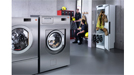
’Benchmark’ series laundry machines: The new PowerGuard PRO process is now available for washing machines with capacities of 12, 16 and 20 kilograms. This enables fire service protective clothing and rescue gear to be waterproofed reliably and efficiently. (Photo: Miele) |
|
| High Resolution JPG |